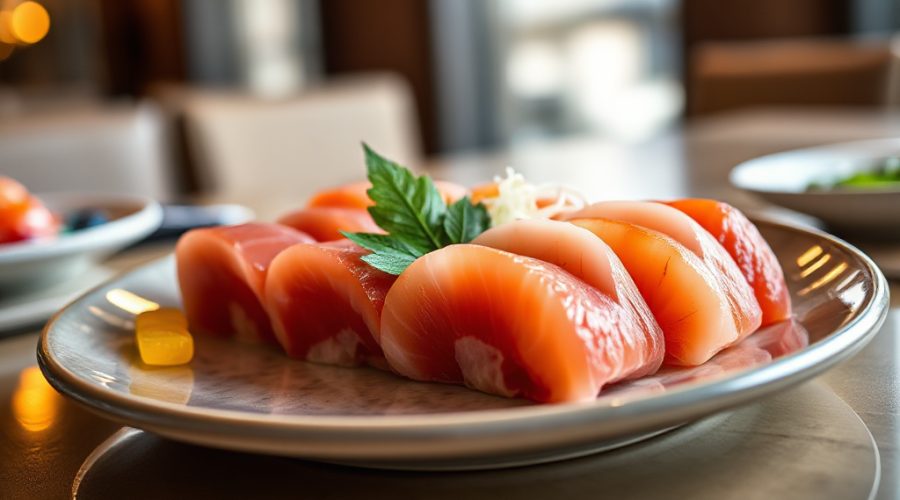
How Freshness Shows on a Sashimi Plate
Before anyone lifts a chopstick, the eye makes a judgment. It scans the plate for color, sheen, and whether the slices hold their shape or slump into themselves. That first glance tells you more about sashimi than any menu description can. If you are looking for a reliable place to start, the meme4d daftar menu gives a clear view of what a Japanese kitchen is offering before you sit down.
Freshness is not a single trait. It shows up in several small signals at once: the way light sits on the surface, the firmness at the edge of a cut, the temperature of the fish against the plate, and the care taken in arranging each piece. Learn to read those cues and you will order with more confidence wherever you eat.
Color and Sheen: The First Signals of Quality
The eye checks color before anything else. Good sashimi looks alive rather than flat. Salmon should show a clear orange-to-pink gradient with fine white fat lines, not a uniform wash of dye-bright orange. Tuna ranges from deep ruby to a softer pink depending on the cut, but it should look even across the slice.
Dull, grayish patches or a brown rim along the edge are the clearest warning signs. A slight darkening at the very edge can happen from oxygen exposure, but a wide brown band usually means the fish has been sitting too long. Sheen matters just as much. A fresh cut catches light with a soft, wet gleam. If the surface looks matte or dry, the fish has lost moisture.
What the Fat Lines Tell You
On salmon and fatty tuna, the white lines should be crisp and evenly spaced. When they blur into the flesh or look watery, the texture has started to break down. Those lines are also a guide to mouthfeel: tighter lines usually mean a cleaner bite, while wider marbling brings a richer, softer finish.
Why Some Fish Looks Paler Than Expected
Not every pale slice is a bad slice. White fish like sea bream or flounder are naturally translucent, and good ones look almost glassy at the center. The test is clarity, not saturation. A milky or cloudy center on a white-fleshed fish suggests it has been stored too long or handled roughly.
Texture and Temperature: What the Chopsticks Confirm
The first bite settles what the eye suspected. Fresh sashimi has a clean resistance when you press it lightly with chopsticks, then gives way without stringiness. It should not fall apart on contact, and it should not fight back like a rubber band. Both extremes point to handling problems.
Temperature is the most overlooked cue. Sashimi should arrive cool but not ice-cold, because near-freezing temperatures mute aroma and firm up the fat in an unpleasant way. A plate that feels refrigerator-cold usually means the fish was sliced too far in advance. Ideally the fish rests just below room temperature so the flavor opens up as it warms on the tongue.
The Feel of a Clean Cut
A sharp knife leaves a smooth, almost polished surface. Run your eye along the edge of a slice: if it looks ragged or torn, the fish was sawed rather than sliced. That roughness affects texture, because torn muscle fibers release moisture and turn the bite mushy.
Smell Without Leaning In
You should not need to bring sashimi close to your nose. A faint sea scent is normal. Anything sour, ammonia-like, or sharply fishy is a reason to stop. Good sushi counters manage this through cold storage, tight turnover, and clean handling, which is why a busy restaurant often serves fresher fish than a quiet one.
Arrangement and Presentation: Reading the Plate
Presentation is not decoration for its own sake. The way a plate is built tells you how much attention the kitchen pays to detail. Slices should be arranged so they overlap slightly without pressing into each other. Garnishes like shiso leaf, daikon threads, and a wedge of lemon are there for a reason: they separate flavors and refresh the palate between pieces.
A well-composed plate also accounts for eating order. Lighter white fish usually sits apart from richer cuts, and the wasabi is placed so you can add it yourself. If the plate looks crowded or the slices are stacked, the kitchen is rushing. Space on the plate is a small signal of confidence.
Why the Plate Itself Matters
Chilled, clean plates keep the fish at the right temperature and let the color read clearly. A warm plate or one with smudges undermines everything above it. Many Japanese restaurants treat plating as part of the service, not an afterthought, and you can see that philosophy reflected in how a menu is organized at meme4d daftar.
Garnishes as Practical Tools
Shiso leaf is not just green contrast. Its mild herbal note resets your palate after a fatty cut. Daikon threads add crunch and a clean, watery texture that balances rich fish. Even the small mound of wasabi is a guide: use a little, taste, then adjust. Overpowering the fish with wasabi hides the very freshness you are trying to judge.
Common Mistakes When Judging Sashimi
Most diners misread freshness because they rely on one cue instead of several. Bright color alone proves nothing if the texture is soft or the plate is icy. Likewise, a modest-looking slice can be excellent if it is cut cleanly and served at the right temperature.
- Judging by color only. Dyes and lighting can exaggerate tone; texture and smell tell the fuller story.
- Assuming colder is fresher. Over-chilled fish loses aroma and feels rubbery.
- Ignoring the cut. A ragged edge signals a dull knife, which affects both texture and moisture.
- Overloading condiments. Heavy soy or wasabi masks the subtle sweetness that fresh fish should have.
- Ordering too much at once. Sashimi is best eaten promptly; a large platter sitting out warms and softens.
The better approach is to order a small selection, taste each type on its own, and pay attention to how the plate changes over the course of the meal. Freshness is easiest to spot in the first few minutes.
Putting the Cues Together
Color, sheen, texture, temperature, and arrangement work as a set. One strong signal is encouraging; several weak ones together are a warning. When a plate gets all of them right, the fish tastes clean and sweet, the fat feels silky rather than greasy, and each piece leaves you ready for the next.
That is the standard to look for whether you are dining in or ordering takeout. Start with a menu that makes the selection clear, then let the first glance at the plate tell you the rest. Freshness rarely hides; it simply asks you to notice.