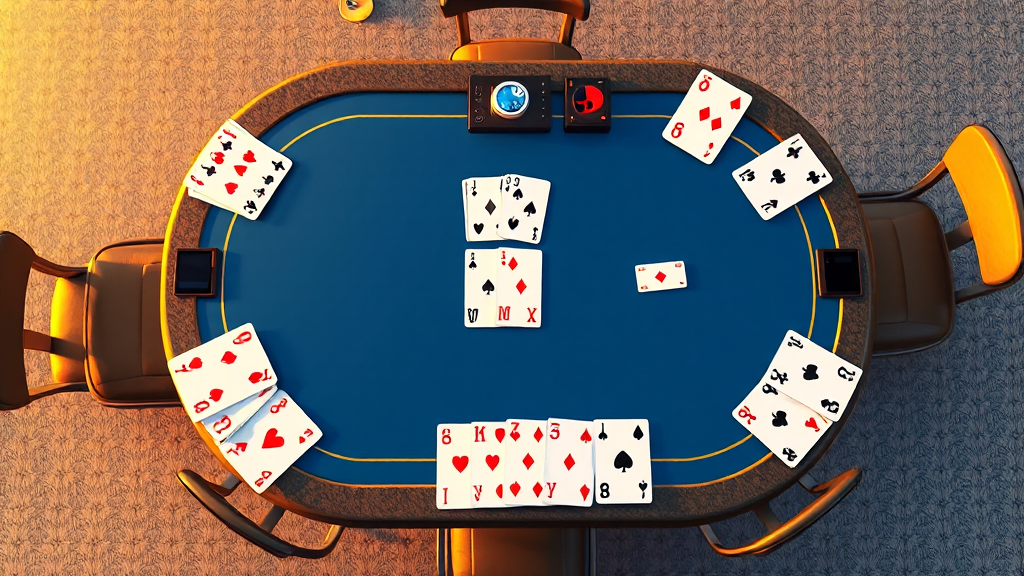
Online Rummy Game: A Practical Guide to Rules, Tables and Smart Play
An Online Rummy Game is a digital version of the classic card game where players draw and discard tiles or cards to form valid sets and sequences before their opponents do. If you have only ever played rummy at a family table with a worn deck of cards, the online version can feel surprisingly different at first. There is a timer ticking, unfamiliar table layouts, and a steady stream of small decisions that decide whether you finish a round or get left holding high-value cards. This guide walks through how the game actually works, what separates a casual player from a sharp one, and how to build habits that keep sessions comfortable rather than chaotic.
Rummy has been played in living rooms and clubs for generations, but the online version reshaped it into something faster and more structured. Instead of waiting for someone to shuffle and deal, you join a table, receive your cards instantly, and play against people from anywhere. That speed is exciting, yet it also means mistakes compound quickly. Understanding the mechanics before you sit down is the simplest way to enjoy the experience instead of fighting it.
How a Round Actually Flows
Most online rummy variants follow the same skeleton. You receive a hand of cards at the start of the round, and your goal is to arrange that hand into valid combinations. A sequence is three or more consecutive cards of the same suit, while a set is three or four cards of the same rank in different suits. In the popular 13-card format, a valid declaration usually requires at least two sequences, one of which must be a pure sequence without a joker substituting for a missing card.
Once the hand is dealt, play moves in turns. On your turn you either pick a card from the closed deck, take the top card from the open discard pile, or in some variants pick from a separate joker pile. After picking, you discard one card to end your turn. That simple loop repeats until someone declares a valid hand or the round ends by exhausting the deck. The tension comes from the fact that every pick and every discard is a small commitment. Take a card you cannot use and you have narrowed your own options while telling opponents something about your hand.
New players often underestimate the discard pile. Experienced players watch it constantly, because the cards other people throw away reveal what they are building and what they have abandoned. Reading those signals is not cheating; it is part of the strategy the game has always rewarded.
Choosing the Right Table and Format
Before you play a single card, decide what kind of round suits your time and comfort level. Online rummy platforms typically offer multiple formats, and each has a different rhythm.
Points rummy is the most common format. Each player starts with a fixed number of points, and the value of ungrouped cards in your hand is deducted when an opponent declares. Rounds are quick, and the scoring is easy to follow once you have seen it a few times.
Pool rummy begins with a shared pool of points. Players who declare successfully take points from the pool, while those who fail to declare contribute to it. This format rewards consistency over one lucky round.
Deals rummy is a fixed number of rounds, and the player with the lowest accumulated penalty at the end wins. It suits players who prefer a clear finish line rather than an open-ended session.
Beyond format, table stakes and player counts matter. Two-player tables are faster and more reactive, while six-player tables demand patience because fewer cards come your way. If you are still learning the rhythm, smaller tables give you more room to think.
Core Strategy That Separates Good Players from Lucky Ones
Rummy is often described as a game of chance, but the decisions you make inside each round carry real weight. The following habits show up again and again in strong play.
Build your pure sequence first. A pure sequence is usually mandatory for a valid declaration, so it should be your priority. Once that foundation is secure, jokers become far more useful because they can plug gaps in other combinations without risking your declaration.
Do not hoard jokers. New players sometimes hold jokers too long, waiting for a perfect use. A joker sitting in your hand is a card that is not helping you reduce points. Use it to complete a set or extend a sequence as soon as it clearly improves your hand.
Discard high-value cards early. Cards like kings, queens, aces and jacks carry higher point values, so they hurt more if the round ends while they are still in your hand. If a high card does not fit a realistic combination, let it go early rather than clinging to a faint hope.
Watch the discard pile for patterns. If opponents are discarding hearts repeatedly, hearts may be contested or the cards you need may already be gone. Adjust your target combinations instead of forcing a sequence that no longer has a realistic path.
Stay flexible between sets and sequences. A card like a seven can belong to a sequence or a set depending on what you draw next. Keeping a card that serves two possible futures is often better than committing early to one plan.
These habits are not tricks. They are the natural result of paying attention to what the table is telling you.
Managing Time, Focus and Session Length
Online rummy moves faster than the tabletop version, and speed changes how fatigue affects your decisions. A round might take a few minutes, but a session can stretch into hours if you are not deliberate about stopping. Long sessions tend to produce loose play: you start taking risks you would not normally take, and small errors accumulate.
A useful approach is to set a session limit before you begin. Decide how many rounds or how much time you want to spend, then stop when you reach it, regardless of whether you are ahead or behind. Taking short breaks between rounds helps too, especially if you notice yourself rushing your discards.
Focus also matters more than people expect. Rummy rewards observation, and observation requires attention. Playing while distracted, tired or multitasking usually leads to missed signals and poorly timed picks. Treat each round as a small puzzle rather than a race, and the experience becomes more enjoyable and more consistent.
Common Beginner Mistakes and How to Avoid Them
Most early losses in online rummy come from a handful of recurring errors. Recognizing them is the fastest way to improve.
Discarding the wrong card. Beginners often discard a card that looks useless in isolation but was actually holding a combination together. Before you discard, check whether that card is part of a partial sequence or set you are still building.
Ignoring the meld requirement. A hand can look impressive and still be invalid because it lacks a pure sequence. Always know exactly which combinations your declaration needs before you plan the rest of your hand.
Playing too many tables at once. Multi-table play is a skill, not a shortcut. If you cannot track the discard pile at one table, adding more tables will not help.
Chasing a single combination. If the cards you need are not appearing, forcing the same plan round after round is a losing habit. Pivot to a combination the deck is actually supporting.
Not reviewing finished rounds. After a round ends, take a moment to see where your hand went wrong. Did you discard a card you later needed? Did you hold a high card too long? That quick review is worth more than another rushed round.
Playing Comfortably and Responsibly
Any card game is more enjoyable when it stays within comfortable limits. Set a personal budget or time boundary before you start, and treat it as fixed rather than flexible. If a session stops being fun, the right move is to step away, not to push through. Rummy is a game of skill and patience, and patience applies to how you manage your own play as much as to how you manage your hand.
It also helps to keep expectations realistic. Rummy has variance built into it. Strong players lose rounds, and weak players win them. What separates them over time is decision quality, not any single result. Judging your play by one round is like judging a book by a single page.
Finally, remember that the social side of rummy still exists online. Chat features, table etiquette and friendly competition are part of what makes the game appealing. Treat opponents the way you would treat people across a physical table, and the experience improves for everyone.
FAQ
What is an online rummy game?
It is a digital version of the traditional card game in which players draw and discard cards to form valid sets and sequences. Rounds are played against other people over the internet, with the same core rules adapted to a faster, timed format.
Do I need a pure sequence to declare?
In most popular variants, yes. A valid declaration typically requires at least two sequences, and at least one of them must be a pure sequence made without a joker. Checking this requirement before you plan your hand prevents invalid declarations.
Are jokers always worth keeping?
Jokers are valuable, but holding them too long is a common mistake. A joker that is not completing a combination is not reducing your points. Use it once it clearly improves your hand rather than saving it for a hypothetical perfect fit.
How can I reduce mistakes as a beginner?
Play fewer tables, focus on building a pure sequence first, discard high-value cards early when they do not fit, and review finished rounds to see where your decisions went wrong. Consistency comes from small corrections, not dramatic changes.
Is rummy purely a game of luck?
Chance affects which cards you receive, but decisions about picking, discarding, and structuring combinations have a real impact over many rounds. Players who observe the table and stay flexible tend to perform better than those who rely on luck alone.